

SOFTWARE INTELLIGENCE • SYSTEMS ARCHITECTURE • MAY 2026
Apple is shipping its LLM-powered Siri in iOS 27 as a public beta, arriving approximately two years behind the assistant's original internal development roadmap. According to Bloomberg's Mark Gurman, internal builds have already flagged processing latency issues and accuracy errors — which is precisely why Apple is wrapping the launch in a warning label. This isn't Apple being humble. It's the calculated move of a company that knows a hallucinating assistant does more brand damage than a slow rollout ever could.
- Apple is launching its LLM-powered Siri in iOS 27 as a public beta, approximately two years behind schedule, with the full reveal set for the WWDC 2026 keynote on June 8, 2026.
- The new standalone Siri chatbot app will let users configure auto-deleting chat history on timers — mirroring iMessage's 30-day and one-year options — a privacy feature that ChatGPT and Gemini currently lack by default.
- iOS 27 includes a "Leave Siri Beta" toggle in Settings that instantly reverts the assistant to the legacy deterministic Siri, with no OS update required.
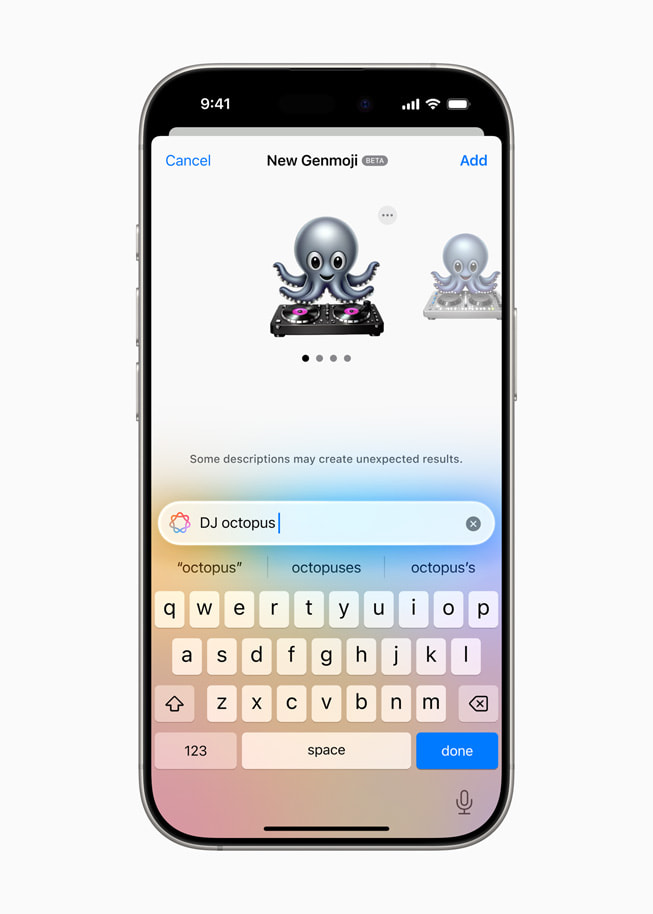
- A new "Suggested Genmoji" keyboard feature analyzes your on-device photo library and typing history locally to proactively suggest custom AI-generated reactions mid-sentence.
- For complex multi-step queries, the new Siri will route requests through Apple's Private Cloud Compute infrastructure and, where needed, to external AI partners including Google Gemini.
- The LLM-powered Siri is approximately two years behind Apple's original internal development roadmap, per Mark Gurman's Bloomberg reporting.
- iOS 27's standalone Siri app ships with two interface modes: a streamlined conversation pane (ChatGPT-style) and an iMessage-style history list.
- Chat auto-delete timers in Siri will mirror iMessage's existing settings — configurable to 30 days or one year.
- The "Leave Siri Beta" toggle in Settings reverts to legacy Siri instantly, bypassing the need for an OS patch or point release.
- Suggested Genmoji operates entirely on-device, parsing local photos and typing history without cloud data transmission.
- Deep reasoning tasks in the new Siri can be delegated to Google Gemini through Apple's existing external AI partnership architecture.
- Apple's WWDC 2026 keynote is confirmed for June 8, 2026, where iOS 27 will make its official public debut.
iOS 27 Siri Beta: Why Apple Is Slapping a Warning Label on Its Own Assistant
The "beta" label on iOS 27's new Siri isn't a technical footnote — it's a deliberate reputational shield. Internal builds circulating inside Cupertino have already raised flags over processing latencies and accuracy errors in early stress tests. By shipping under a public beta tag, Apple constructs a preemptive buffer: if the assistant hallucinates, hesitates, or just gets things wrong, the warning was already there.
The LLM overhaul of Siri was originally mapped out well before WWDC 2024, but foundational model stability and on-device inference limitations pushed the timeline back repeatedly. Two years of delay compressed into a single product strategy. This is Apple admitting — in the most brand-controlled way possible — that the work isn't finished yet.
The alternative was worse. Shipping an unreliable AI assistant under Siri's full brand weight, with no caveat, would have been a PR disaster. A beta label is the corporate move that buying time actually looks like.
iOS 27 Siri Standalone App: Chatbot Interface With Auto-Deleting Chat History
For the first time, Siri is getting its own dedicated chatbot app — a structural change that signals how seriously Apple is rethinking the product. Users can choose between two layout modes: a streamlined conversation pane that will feel immediately familiar to anyone who has used ChatGPT, or an iMessage-style history list for navigating past interactions. The UI flexibility is notable, but it's the data policy underneath that makes iOS 27's Siri genuinely different from its competitors.
The new Siri app ships with configurable auto-deleting chat history. Just as iMessage lets you automatically purge conversations after 30 days or a year, iOS 27 will let you apply the same ephemeral logic to every Siri interaction. ChatGPT requires users to manually delete their history. Google Gemini stores your conversations directly in your Google account by default. Apple is turning data minimization into a feature — and for a meaningful slice of users, that's the actual selling point.
This isn't just privacy theater. Apple's Private Cloud Compute architecture is built on the premise that AI inference can happen without your data being retained or exposed to Apple's servers. Auto-deleting chats extend that commitment into the product layer that users actually see and interact with.
| Privacy Feature | iOS 27 Siri | ChatGPT | Google Gemini |
|---|---|---|---|
| Auto-deleting chat history | ✅ Configurable timer | ❌ Manual only | ❌ Stored in Google account |
| On-device inference | ✅ Private Cloud Compute | ❌ OpenAI cloud | ❌ Google cloud |
| Opt-out to legacy mode | ✅ "Leave Siri Beta" toggle | ❌ No fallback | ❌ No fallback |
| Used to train models | ✅ Opt-in only | ⚠️ Opt-out required | ⚠️ Opt-out required |
Leave Siri Beta: How iOS 27's Instant Opt-Out Toggle Actually Works
Apple has engineered an escape hatch directly into iOS 27 Settings: a toggle labeled "Leave Siri Beta." Flip it, and the LLM engine steps down immediately. The hardware reverts to the legacy, deterministic version of Siri — the rules-based system that may not understand complex context but won't hallucinate your calendar appointments either. No OS patch. No waiting for the next point release.
This is unprecedented for a flagship Apple feature. It signals two things simultaneously: Apple knows the initial rollout will be imperfect, and they have prioritized day-to-day usability over the optics of admitting a product isn't finished. A broken assistant that can't be escaped is worse than a limited one that can. The opt-out exists precisely because of that calculus.
For users who rely on Siri for real tasks — timers, accessibility functions, smart home controls — having an immediate fallback matters. The new LLM layer introduces a failure mode that the legacy system simply didn't have: it can be wrong in ways that feel confident. The kill-switch is the only responsible way to ship something with that risk profile.
Suggested Genmoji: How iOS 27's Keyboard Learns From Your Photos and Typing Habits
Suggested Genmoji is Apple's attempt to make generative AI feel embedded rather than bolted on. With an optional keyboard setting enabled, iOS 27 analyzes your local photo library and commonly typed phrases entirely on-device. The keyboard then surfaces personalized, AI-generated emoji reactions mid-sentence — before you've opened any app or typed a single prompt. No manual generation workflow. No separate interface to navigate.
The on-device processing is the detail that matters most here. Apple isn't uploading your photo library to generate these suggestions. The inference runs locally, consistent with Apple's broader Private Cloud Compute architecture. For an in-depth look at how that infrastructure works, we covered the Apple Intelligence privacy architecture in detail here.
It's a small feature with an outsized signal. Suggested Genmoji is the kind of integration that makes generative AI feel native to iOS rather than imported from somewhere else. That's the gap Apple is trying to close — not in raw model capability, but in how seamlessly the AI exists inside the OS.
Dynamic Island and Siri: How the Interface Scales From Quick Queries to Deep AI Reasoning
For quick interactions, the new Siri operates inside the Dynamic Island — transparent overlay cards surfacing calendar appointments, notes, or weather details without pulling you out of whatever you're doing. It's the same interaction surface, delivering a meaningfully upgraded output layer underneath. For most everyday tasks, this is where the new Siri lives.
For deeper, multi-step reasoning, the interface expands seamlessly into the full chatbot container. That includes routing complex queries outward. According to Gurman's reporting, Google Gemini is one of the external models Siri can delegate to when tasks exceed the on-device model's capability — building on the Apple-Google AI partnership that has been in place since iOS 18.
Apple isn't hiding the fragmentation in this architecture. They're leaning into it. The hardware and the privacy layer belong to Apple. The heavy reasoning, when needed, goes elsewhere. It's an honest position for a company whose foundation models aren't yet at the frontier — and it's a more defensible one than overpromising on capabilities that aren't there.
Frequently Asked Questions
Enjoy this article? Follow us on Google to see more content like this.
 Add as a preferred source on Google
- Get link
- X
- Other Apps
Labels
Apple Apple Intelligence iOS Siri WWDC 2026- Get link
- X
- Other Apps
Comments
Post a Comment